
How to Verify Authentic Saharanpur Woodcraft Online
Learn how to assess Saharanpur woodcraft online by checking provenance, materials, craftsmanship, documentation, and responsible sourcing.
Start With Provenance and Seller Transparency

Authenticity begins with knowing where a wooden product comes from. Saharanpur is a renowned wood-carving center in Uttar Pradesh, recognized for its long craft tradition and distinctive carved, turned, painted, and utility goods. However, a product being described as “Indian handicraft” does not automatically prove that it was made in Saharanpur. Look for a clear origin statement, workshop or artisan context, and specific information about how the seller sources its inventory.
A trustworthy online listing should explain whether the item is made in Saharanpur, assembled elsewhere, or sourced through a particular workshop or artisan network. It should also provide consistent photographs rather than generic catalog images. Check the seller’s contact details, return policy, customer reviews, and answers to questions about production. Ethical sourcing is easier to evaluate when a business is willing to discuss workshop relationships, quality checks, and fair purchasing practices. Regional provenance adds meaning and potential value to Saharanpur woodcraft, but transparency—not romantic storytelling alone—should guide your buying decision.
Examine Wood, Construction, and Finish Details
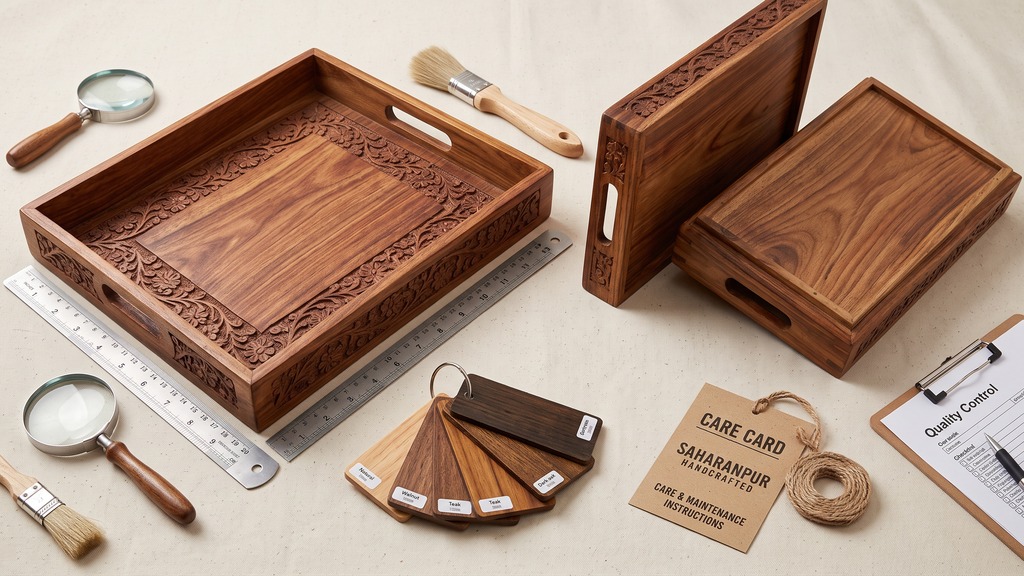
Good product documentation should make the object easy to evaluate before purchase. Confirm the wood species or, at minimum, the type of wood category used. Ask whether the material is solid wood, engineered wood, or a combination, and look for details about grain, moisture treatment, and intended use. Product dimensions should include length, width, height, and—when relevant—weight. These details help you judge scale, stability, and shipping suitability.
Study close-up images of carving, joints, edges, handles, and the underside. Handmade variation is normal, but deep cracks, loose components, uneven sanding, excessive filler, or flaking finish may indicate poor quality. A professional listing should identify whether the surface is natural, stained, painted, waxed, or sealed, and should provide care instructions. For food-contact items such as serving boards or trays, verify whether the finish is suitable for that purpose. Comparing these details across listings helps distinguish carefully documented wooden handicrafts from vague or mass-produced décor marketed as artisan work.
Use Documentation to Judge Value and Satisfaction

Before placing an order, compare the listing’s documentation with your expectations for use, delivery, and long-term care. A reliable seller should state processing time, estimated delivery date, packaging method, shipment tracking, and the procedure for reporting damage. Protected packaging matters because carved wooden décor can be vulnerable to impact, moisture, and abrasion in transit. For wholesale buyers, request information about minimum order quantities, repeatability, lead times, sample approval, and quality standards.
Remember that authenticity is not determined by age, price, or the amount of ornamentation. A modest utility item can be genuine Saharanpur woodcraft when its origin and making process are honestly represented. Artisan context can strengthen trust because it connects the object to real skills and regional knowledge, while clear care guidance supports lasting satisfaction. Save the product description and photographs, ask questions before payment, and choose sellers that provide responsive customer service. With these checks, home decorators, gift buyers, designers, boutiques, and diaspora shoppers can purchase confidently while supporting responsible access to Saharanpur craftsmanship.